The 2025 CEBL season has come and gone. A quick congratulations to the Niagara River Lions for going back-to-back and getting the job done on Championship Weekend. But now that the dust has settled on a great couple days and even months of basketball, it’s time to reflect on the season that’s now past and where the Winnipeg Sea Bears specifically go from here. At the beginning of the summer in my 2025 Sea Bears preview, I made mention that head coach Mike Taylor’s two year contract has now come to an end. As well, I had spoken about how important of a summer this was to be for Taylor, after the amount of roster turnover the team saw, and with CW being in town, the pressure there was to win. As we know now, Winnipeg fell to the Surge in the Western Conference Final, with not too much of a fight. The roster turnover this summer was even more of a topic of discussion with the Sea Bears seeing 19 different players get minutes during the regular season. The issues that have plagued Taylor and his teams the previous two seasons were still glaring issues in year three. So what do we make of it? Where does the organization go from here? Are there changes that need to be made and what should they be? I’ll dive into all those questions here shortly, but first let’s do a quick temperature check on everything with the season now over.
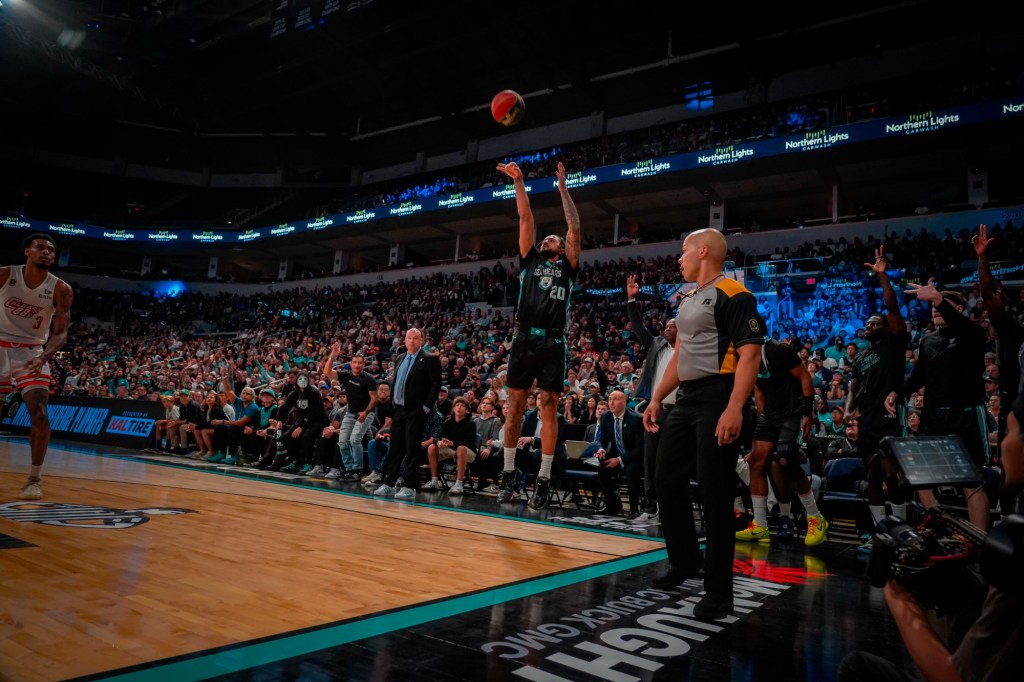
Photo: CEBL
Aftermath
With the expectations of hosting CW 2025, the hopes for Winnipeg was to be much different than other hosts. They wanted not only to be competitive during the regular season, but put themselves into the conversation of best in the West and league. Out of all the hosts that the CEBL has had for CW, Winnipeg undoubtedly had the best record, the best overall roster, and best finish. But they obviously did not reach their goal of being one of the best in the league. Finishing fourth above Saskatchewan, and never really threatening to push for a top conference spot did make it feel like their spot was given, not earned. As we have seen from other hosts and now Winnipeg, being the CW host is not the easiest thing. It makes the regular season a drag, it can be difficult for some to play up to their full potential due to interest, and it feels like nothing really matters until the post-season. We saw that a lot over the course of the summer from Winnipeg, with some players having difficulty keeping their intensity level throughout the entirety of the game, their “meh” attitude after losses (even some wins), and it seemed like buy in from some was minimal at the beginning of the summer that dragged into late in the season. It felt like at times coach Taylor did his best to try and minimize these faults, but he too seemed like he had this type of attitude in spurts. Hosting CW isn’t the walk in the park some thought it would be. Just like I mentioned the intensity levels fluctuating throughout individual games for the Sea Bears, the same goes for their season as a whole: this rollercoaster ride that seemed to never hit it’s peak, nor rock bottom. Their variance in compete level translated to alternating wins and losses, whether that be in winning, or losing streaks. Winnipeg just could never find a way to stay consistent. That seemed to bleed into their roster as well, as I had mentioned that 19 different players suited up and played minutes for the Sea Bears this summer. Only eight players from the opening roster were still in Winnipeg come CW weekend (that includes players that left and came back, or joined the roster late due to other commitments). This is a league that sees quite a bit of turnover, but at the rate the Sea Bears had players coming in and out (especially after the promises made following last summer and before this season), was quite concerning. If you are wanting to win a championship in the CEBL, you need some sort of continuity. Both teams who made the final this summer had rosters that stayed relatively the same the entire season. Overall, many promises were made and not many kept. So where does Mike Taylor fit into all of this? Let’s dive into what he’s done well in his tenure and what needs to improve.
Strengths
One of the strengths that you cannot take away from Taylor has been his ability to attract talent. Sure, you could chalk it up to the facilities the Sea Bears have, the playing environment, relative to the rest of the league. It could also be the connections that other players have. But the bottom line is that he is able to convince these players to join the team and build very solid rosters. Whether they have gelled or not, on paper the last two seasons especially he’s had talented players come to Winnipeg. The main strengths of those talents have been offence. You think of Teddy Allen, Justin Wright-Foreman, Jalen Harris just to name a few. Those names have had Winnipeg in the top half in terms of generated offence throughout his tenure. Specifically, half court offence. Taylor’s teams have been relatively structured and committed to that slow and execution style of play. He has added a little more of a modern flair, having his teams shoot a good chunk of threes as well. The Sea Bears have led the league in three point attempts per contest two of his three seasons, while also being towards the top in terms of makes per game. You could argue that they have been a little too reliant at times and has been their downfall, but it also won them games. I would love to go on an say that Taylor comes without his flaws, but unfortunately that isn’t the case
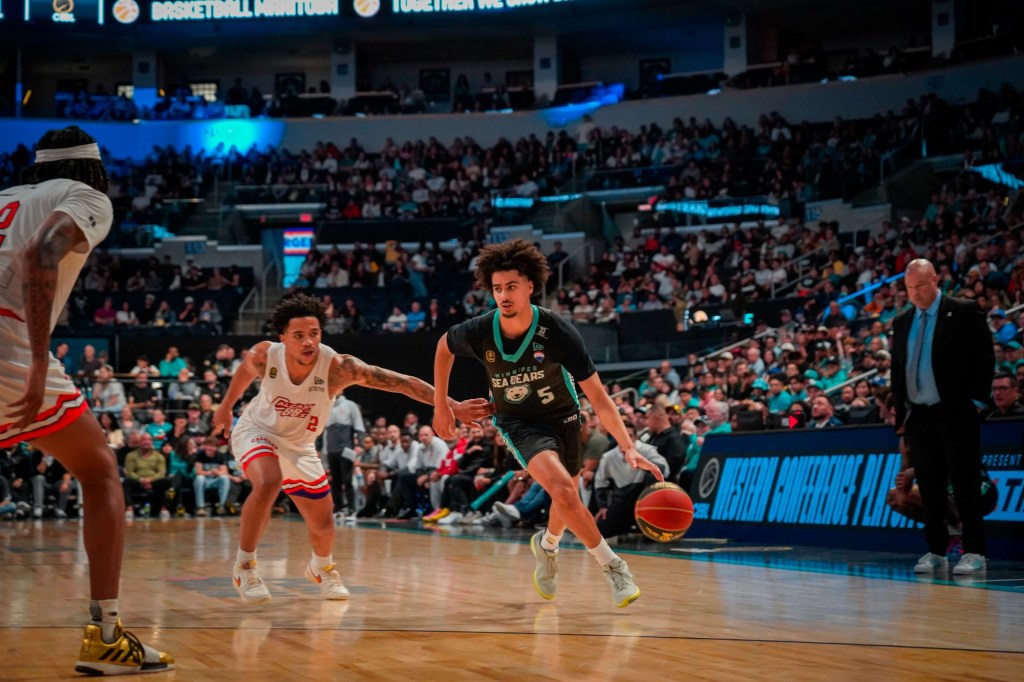
Photo: CEBL
Weaknesses
One of Taylor’s biggest weaknesses is how his teams function in transition. Both on offence and defence, it just looks clunky and normally results in bad things happening. That can be offensive turnovers or just plain leaving opponents wide open for easy baskets. In modern basketball, if you are not good in transition, then you are making wins come so much more difficult than they need to be. This is especially the case when you play in a conference with two teams who rely on that dimension to win/take advantage in games. Calgary and Edmonton have dominated them on that front, which has made it feel like they are unbeatable. This, coupled with the fact that Winnipeg has not been great defensively, has forced them up a very steep hill to climb to win games. They’ve been good offensively as I mentioned, but not elite to the level that it wins them games on that alone very often. Being very one dimensional offensively has also put Taylor and the Sea Bears in a box, and makes them easier to plan around. Again, their execution on offence can be a calling card, but certainly has its flaws due to the complexity of the sets he liked to run. The Sea Bears under Taylor have really only been able to win games one type of way, unless there is a huge talent discrepancy. Not a great recipe for success. We also haven’t seen enough evidence that his in game adjustments are also on par with others around the league, which means that one dimensional box gets even smaller.
What’s Next?
As I mentioned above, Taylor has made it very difficult to win games in the CEBL, having put himself into this one dimensional box. There needs to be some sort of evolution there for Winnipeg to take that next step. Either that or, game by game adjustments need to be made if true evolution isn’t going to happen. At this current point in time, I do believe it’s best if the Sea Bears organization takes a look at a potential new general manager and bench boss. A new perspective might be what this team needs to take that next step, which would be getting that first playoff win. My only concern is that it seems as though the organization is overall pleased with Taylor’s work, especially how he has engrained himself into the community. The most likely case seems to be another extension is coming. An interesting take here could be moving to a full-time GM role for Taylor, and the Sea Bears looking for just a head coach instead.
 Heart of The Continent Hoops